Beyond Phở: A Winter Guide to Vietnamese Noodle Soups in Adelaide
★ As featured in Glam Adelaide — 2025 SA Restaurant & Catering Awards finalist
Adelaide in July asks a lot of a lunch. The wind comes off the hills, the footpaths on Grote Street are slick with rain, and what you want — what you need — is a bowl of something hot enough to steam up your glasses. Most people know exactly one Vietnamese answer to that problem: phở. And fair enough — it’s the bowl we’re famous for. But phở is the front door of Vietnamese soup, not the whole house. Behind it sits a family of noodle soups that Vietnamese families argue about, queue for and fly home for, and three of them are sitting quietly on our menu at Bà Năm: hủ tiếu Nam Vang, mì quảng and bún riêu — each $22, each made the slow way, no shortcuts.
If you’ve worked your way through our guide to phở and graduated to bún bò huế, consider this the next chapter.
Hủ tiếu Nam Vang — the Phnom Penh noodle soup
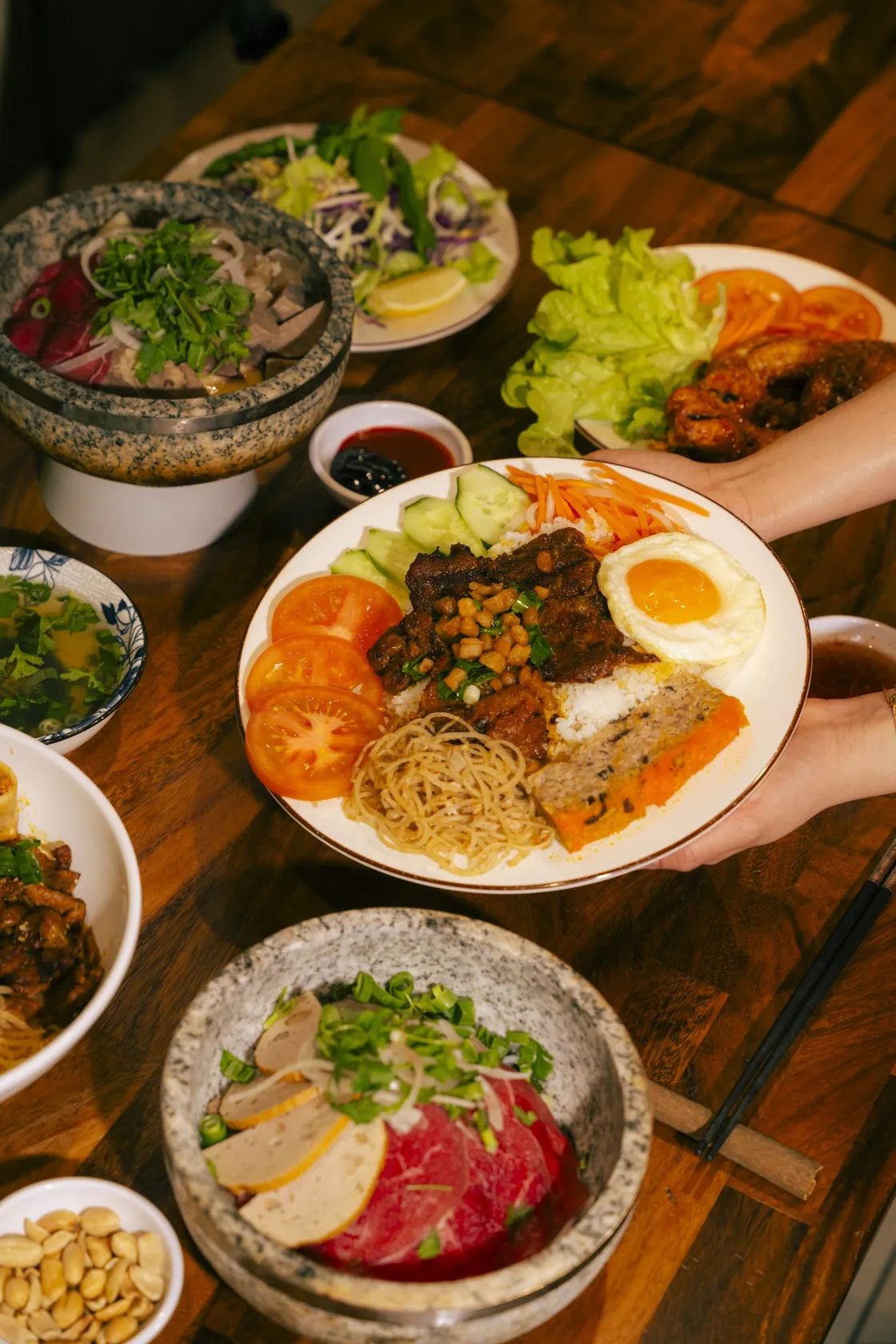
Hủ tiếu Nam Vang is southern Vietnam’s great crossroads dish. “Nam Vang” is the Vietnamese name for Phnom Penh, and the soup travelled from Cambodia into Saigon with Chinese-Cambodian cooks, picking up Vietnamese habits along the way. The classic bowl is built on a clear, gently sweet pork-based broth — lighter and cleaner than phở’s beefy depth — over springy noodles, traditionally topped with a generous mix of pork and prawn.
The trick regulars know: hủ tiếu comes two ways, and ours is no exception — as a classic noodle soup, or khô (dry style), with the noodles tossed in a savoury dressing and the hot broth served in its own bowl on the side, so the noodles stay bouncy from first chopstick to last. On a freezing day it’s the best of both worlds: a noodle dish and a cup of soup in one order. On our menu at $22, soup or dry — your call. We love it enough to give it its own guide if you want the full story.
Mì quảng — turmeric noodles from central Vietnam
Mì quảng comes from Quảng Nam province on the central coast, and it breaks every rule phở taught you. The wide rice noodles are tinted gold with turmeric. The broth doesn’t flood the bowl — it sits low, concentrated and intensely savoury, more sauce than soup, so every strand carries flavour instead of swimming in it. The traditional bowl is finished with fresh herbs and a satisfying crunch on top.
It’s the bowl for people who order noodle soup and secretly wish there were more noodle and less soup. Central Vietnamese food is proud, punchy and a little stubborn — the same streak that runs through bún bò huế — and mì quảng might be its most loveable expression. Ours is $22, and it pairs dangerously well with a Vietnamese iced coffee for afters. We’ve given it its own mì quảng guide if you want the full story before you order.
Bún riêu — the crab and tomato bowl
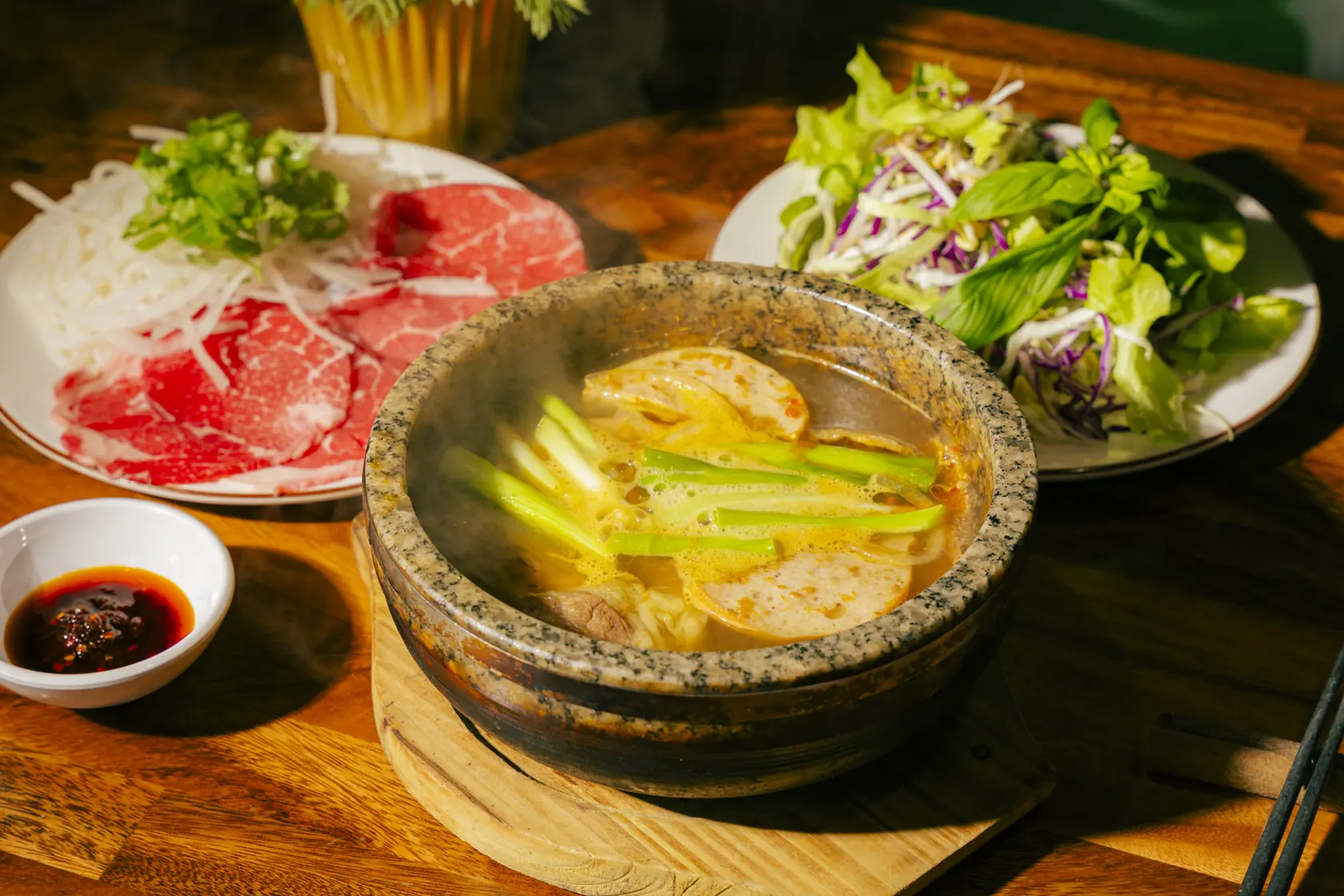
Bún riêu is the sleeper hit of the menu — the bowl Vietnamese diners spot from three tables away and order without opening the menu. Its broth is simmered with tomato until it turns a sunset orange, then enriched with riêu — a delicate crab paste that gives the soup a sweet-briny depth you won’t find in any beef broth. Soft vermicelli noodles soak it all up, and a squeeze of lime at the table sharpens everything into focus.
It’s tangy where phở is mellow, bright where bún bò huế is fiery — arguably the most refreshing thing you can eat that’s also steaming hot, which makes it a quietly perfect winter order. On our menu at $22. Full deep-dive: our dedicated bún riêu guide. If comfort food is what you’re after this season, it sits right alongside our other Vietnamese winter warmers — including the slow-braised bò kho, the stew cousin of these soups.
Which bowl should you order?
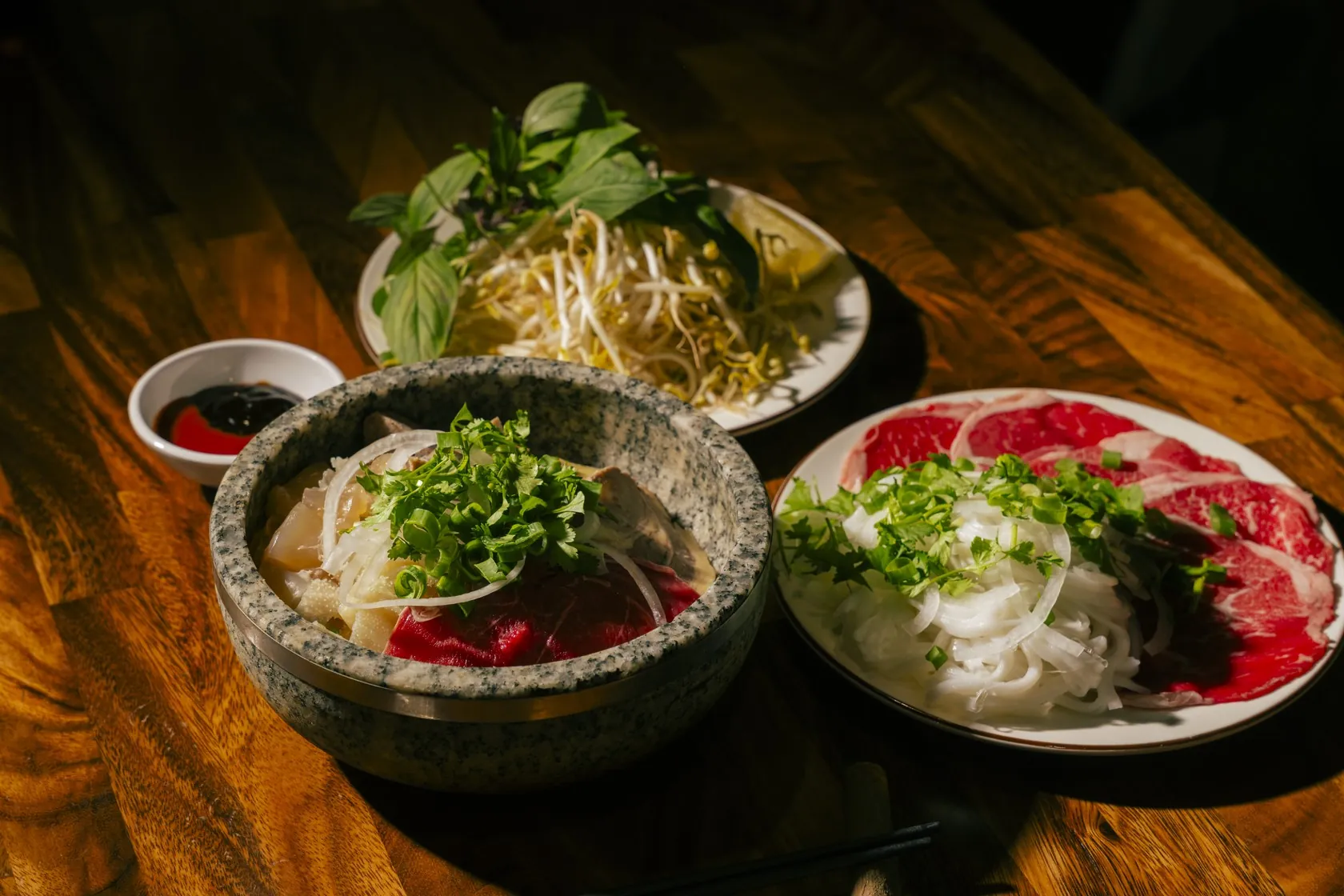
An honest steer from the counter: if you’re new to Bà Năm, start with the Phở Tái and its red coin of rare beef — it’s the dish behind the 18-hour broth we build the kitchen around, and the standard everything else answers to. If you like phở but want it bolder and spicier, bún bò huế is your next stop. From there: hủ tiếu Nam Vang if you want lighter and cleaner, mì quảng if you want fewer ladles and more noodle, and bún riêu if you want something tangy, tomatoey and completely unlike anything else on the table. There is no wrong door — they all lead back to the same family kitchen in Trảng Bàng, Tây Ninh, where Bà Năm Lời first ladled soup in the 1970s.
Visiting us this winter
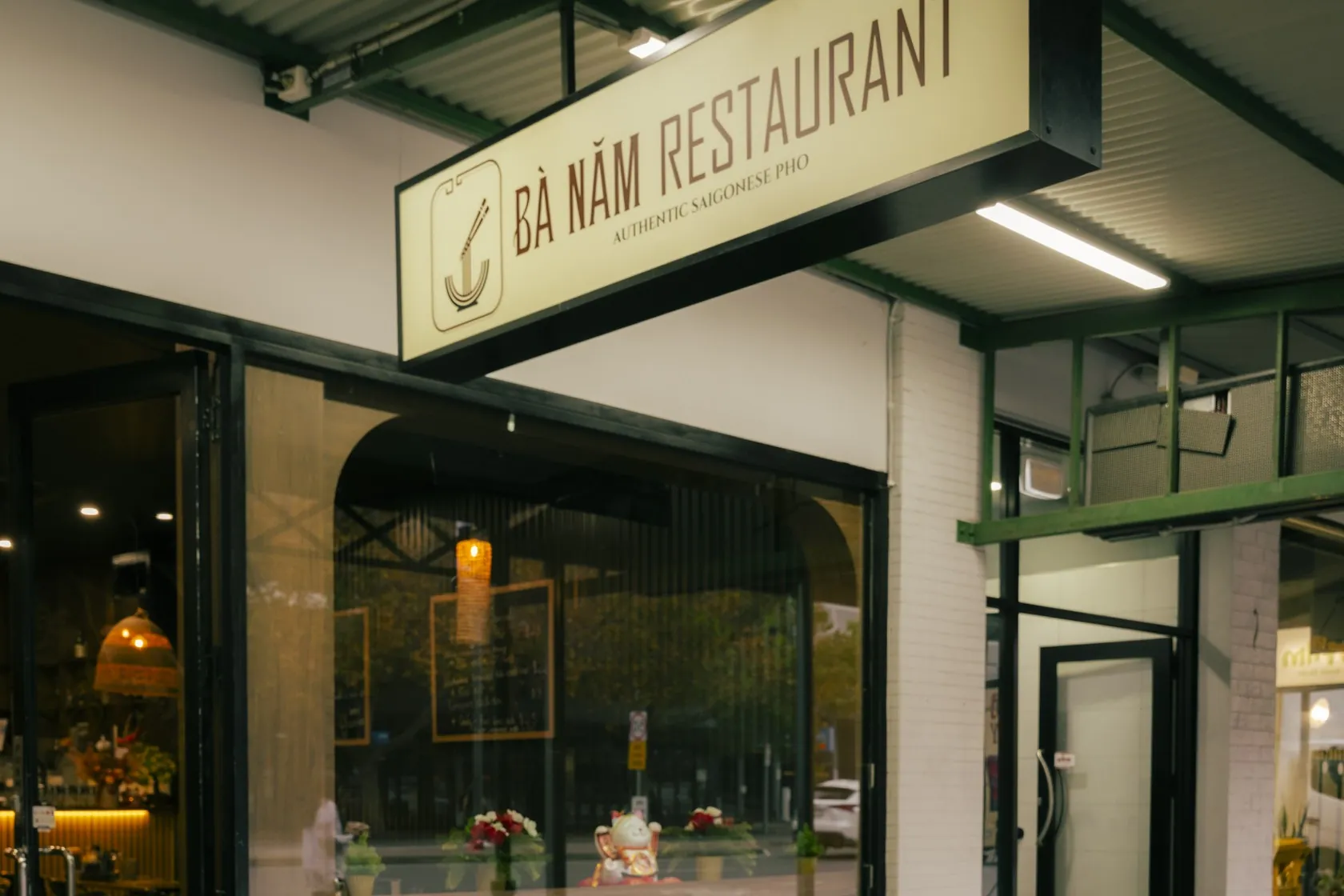
You’ll find us at 65 Grote Street, Adelaide SA 5000 — in Chinatown, a short walk from the Adelaide Central Market. We’re open 7 days, 11:00 AM to 9:00 PM (until 9:30 PM October–March), public holidays included. Walk-ins are welcome, and you can book online via OpenTable. The honest truth is that at peak times there’s usually a 15–30 minute wait — everything is cooked fresh and the broth pots don’t hurry for anyone. The cheat code is ordering ahead online, or coming slightly before noon. For groups of 8 or more, call us on (08) 8151 0106 so we can set a table. Delivery-wise we’re on Uber Eats and DoorDash, but ordering through the Bà Năm app gets you a better price.
We’re not a luxury venue, just very genuine — a Chinatown family phở shop cooking Grandma’s authentic recipes the long way, from locally sourced beef and vegetables that our manager Huynh drives out to the farms to collect every Sunday. Come hungry, bring your people, and let winter do its worst — there’s a hot bowl on Grote Street with your name on it.
And the bold Mekong bowl: Bún Mắm
The cluster above covers hủ tiếu Nam Vang, mì quảng and bún riêu — but our menu also carries Bún Mắm ($25), the Mekong-style fermented fish noodle soup with prawns, squid, pork, chả lụa and eggplant over thick vermicelli. If you want the deepest, savoury end of the spectrum after phở and bún bò huế, start there.
And back to the house classic: Phở Đặc Biệt
Before you wander the full noodle-soup family tree, remember the combination phở still sits at the centre of the menu. Phở Đặc Biệt layers rare beef, brisket, meatball, tendon and tripe in our 18-hour bone broth — Small $20, Large $22, no upcharge for the mix.
Frequently asked questions
What is hủ tiếu Nam Vang?
A southern Vietnamese noodle soup with roots in Phnom Penh, Cambodia — a clear, lightly sweet pork-style broth over springy noodles, classically topped with pork and prawn. At Bà Năm it’s $22, served as soup or dry style with the broth on the side.
What’s the difference between mì quảng and phở?
Phở is a full bowl of clear beef broth with flat rice noodles; mì quảng uses wide turmeric-gold noodles with just a small amount of concentrated broth — closer to a sauced noodle dish than a soup. Both are on our menu.
Is bún riêu very fishy?
No — the crab paste reads as savoury depth rather than fishiness, and the tomato keeps the broth bright and tangy. If you enjoy laksa or tom yum, bún riêu is an easy jump.
Do I need to book?
No — we’re walk-in, 7 days a week. Expect a 15–30 minute wait at peak times, or order ahead at order.phobanam.com.au. Groups of 8+ should call (08) 8151 0106.
Which Vietnamese noodle soup should I try first if I've only ever had phở?
Start with hủ tiếu Nam Vang — its clear, lightly sweet pork broth feels familiar but the prawns and chewy tapioca noodles take you somewhere new. If you're chasing bolder flavours, bún bò Huế brings lemongrass and a spicy kick that phở lovers tend to fall for fast.